
How to Use AI for Affiliate Product Reviews Without Losing Your Readers’ Trust. So, let’s discuss how to use AI for affiliate product reviews
Readers who search for a product review want one thing the sales page can’t give them: someone else’s honest experience. A review written entirely by AI has none, and readers notice quickly. Using AI well means giving it the jobs it does well and keeping the parts that depend on you.
This article shows how to use AI for affiliate product reviews so you finish faster, your readers still get the truth, and your site stays one people return to.
Why readers can tell when a review was written by nobody
A review with no author behind it has a recognizable sound. Every feature gets praised in the same warm tone, and the points could apply to any product in the category. The structure is tidy, and the sentences are smooth, but nothing in it could only have come from someone who used the product.
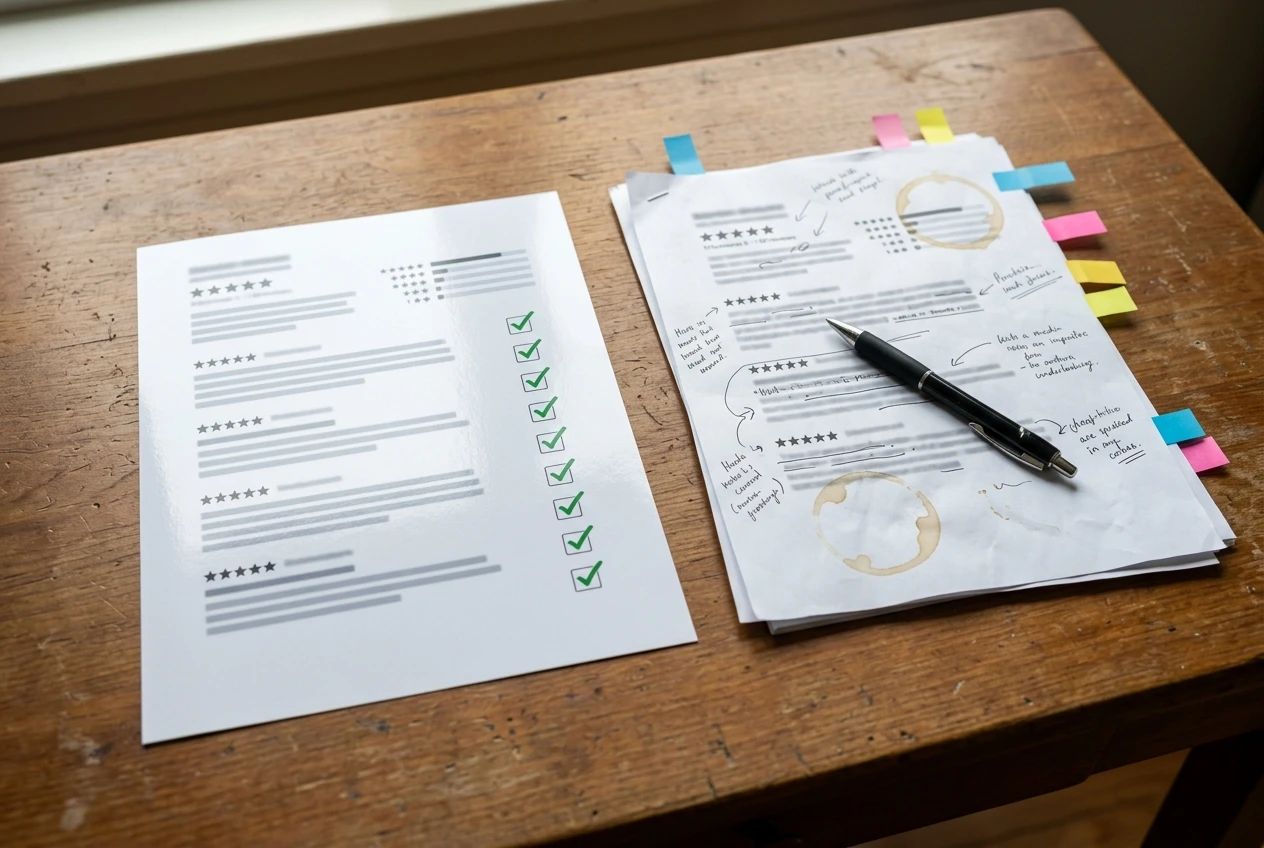
These are the usual giveaways:
- No specifics. “Easy to use and packed with features” tells the reader nothing. “The setup took me through four screens, and I was done” tells them something. Only real use produces the second kind of sentence.
- No drawbacks. Every product has a weakness, whether price, a missing feature, a confusing menu, or a poor fit for certain people. A review with no downsides reads as an ad.
- A feature list that mirrors the sales page. If the review says what the product page says, the reader has no reason to read it.
- Confident claims that are slightly off. AI tools can state a price, a plan limit, or a spec with total certainty and be wrong. One wrong detail makes the reader doubt everything else.
Trust is the asset an affiliate site runs on. A reader who feels misled by one review will discount your next recommendation, and the commission from a single sale is small next to that loss.
What AI is good for in a review, and what it should never touch
AI is fast at the work that surrounds your experience. It is unreliable at the work that is your experience. Splitting the job along that line is the whole method.
Good uses for AI:
- Organizing your research into a clear outline
- Suggesting questions a buyer is likely to ask, so you can check your review answers them
- Turning your rough notes into readable paragraphs
- Tightening wordy sentences and fixing grammar
- Offering headline and meta description options to choose from
- Pointing out claims in your draft that need checking
Never hand these to AI:
- Your experience. AI cannot say you used something for a month, because you didn’t tell it so. If it writes that sentence, it is making it up.
- Your verdict. The recommendation, and who the product is or isn’t for, has to be your own judgment.
- The drawbacks. Add these yourself from your notes. AI tends to soften or skip them.
- Prices, specs, plan limits, and guarantees. Take these from the official product page on the day you publish.
- Testimonials, quotes, and results. Never let a tool invent a customer story or an income figure.
- Your disclosures. You decide the wording and the placement.
A useful test is to ask of each sentence whether the reader is relying on it to be true of your experience. If so, you write it.
Do the real work first: your notes, your use, your verdict
The best review starts before you open any AI tool. Spend your time on the product itself, then write notes while the details are fresh. Rough notes are enough, and they are the raw material that makes the final draft worth reading.
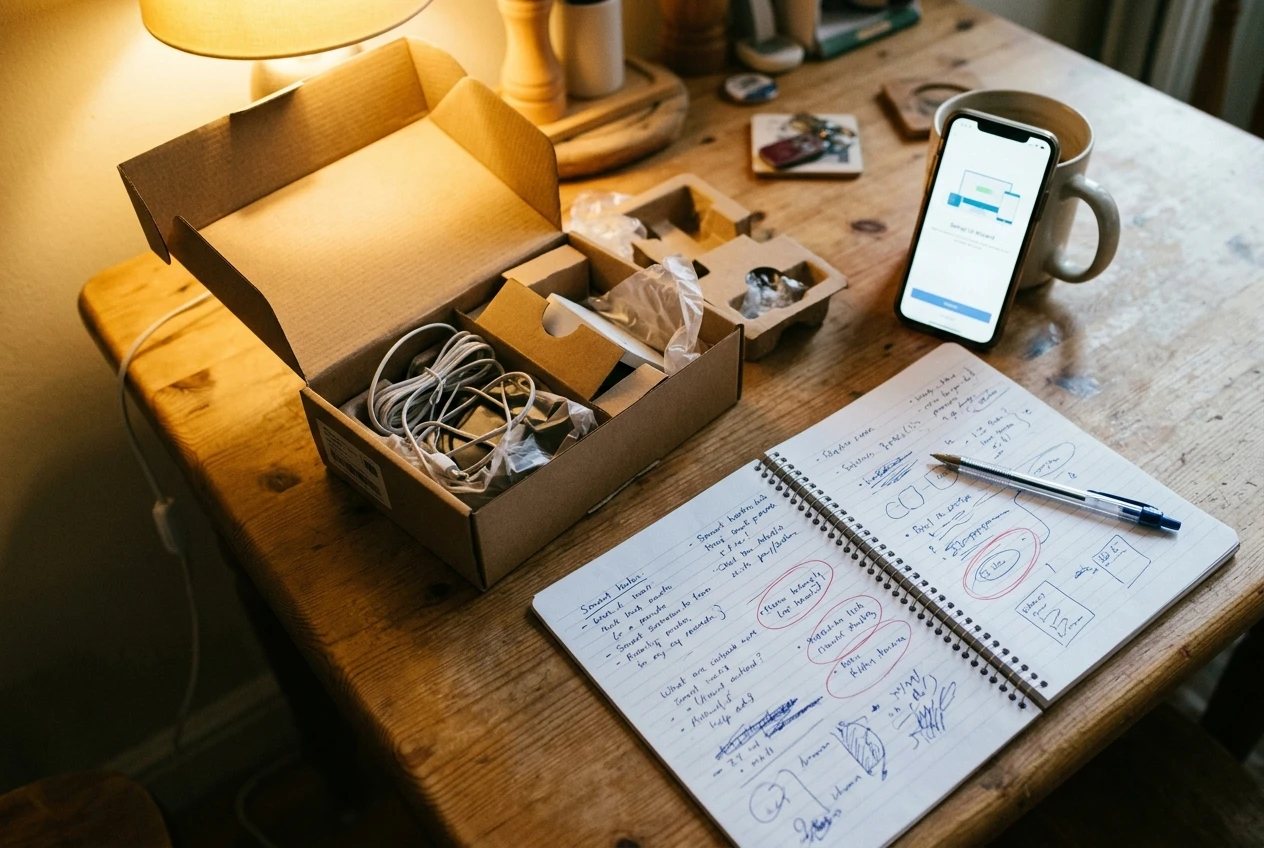
Cover these points in your notes:
- What you used it for. Describe the actual task or situation, not the product category.
- How long you used it. A single afternoon and several weeks give different information, and readers want to know which one it was.
- Setup and learning curve. Note what was simple and where you got stuck.
- What worked well. Be specific about outcomes you saw.
- What annoyed you or fell short. Write at least two real drawbacks if they exist.
- Who should buy it. Say who it fits and who should skip it.
- Price and terms. Copy these from the official page and note the date you checked.
- Your one-sentence verdict. Write it yourself, before any draft exists.
Add a screenshot or photo of your own use if you can, since a real image does more for credibility than any paragraph.
If you haven’t used a product, don’t write a first-person review of it. You can still publish something useful, such as a comparison or research roundup that says plainly it is based on published information and not hands-on testing. Readers accept that kind of article when it is labeled honestly.
Prompts that turn your notes into a clear first draft
With your notes done, AI becomes a writing assistant that works from your material. The prompts below are written so the tool has to stay inside what you gave it.
Prompt 1: the outline
I am writing an honest review of a product I have used. Below are my notes. Suggest an outline with headings that follow what a buyer would want to know, in this order: who it is for, what it does, what I liked, what I did not like, price, and my verdict. Use only the points in my notes. Paste my notes after this message and wait for them.
Prompt 2: the first draft
Using only my notes below, write a first draft of each section in a natural, conversational tone. Do not add any feature, price, statistic, result or personal experience that is not in my notes. If a section needs information I did not give, write a short note in capital letters saying what is missing instead of filling it in. Keep the drawbacks as direct as I wrote them. Do not use hype words like “game-changer” or “revolutionary.”
The instruction about missing information matters most. It makes the tool flag gaps so you can fill them with real details, instead of covering them with plausible filler.
Prompt 3: the fact check
List every factual claim in the draft above that a reader could check, such as prices, plan limits, features and guarantees. Put them in a list so I can verify each one against the official product page.
The list is a to-do for you, not a verified result. The tool cannot confirm these claims, so you check each one yourself on the official site.
How to edit an AI draft until it sounds like you
An AI draft is a starting point. It usually reads cleanly but flat, with even rhythm and safe wording. Editing it takes less time than writing from nothing, but it has to be done properly.
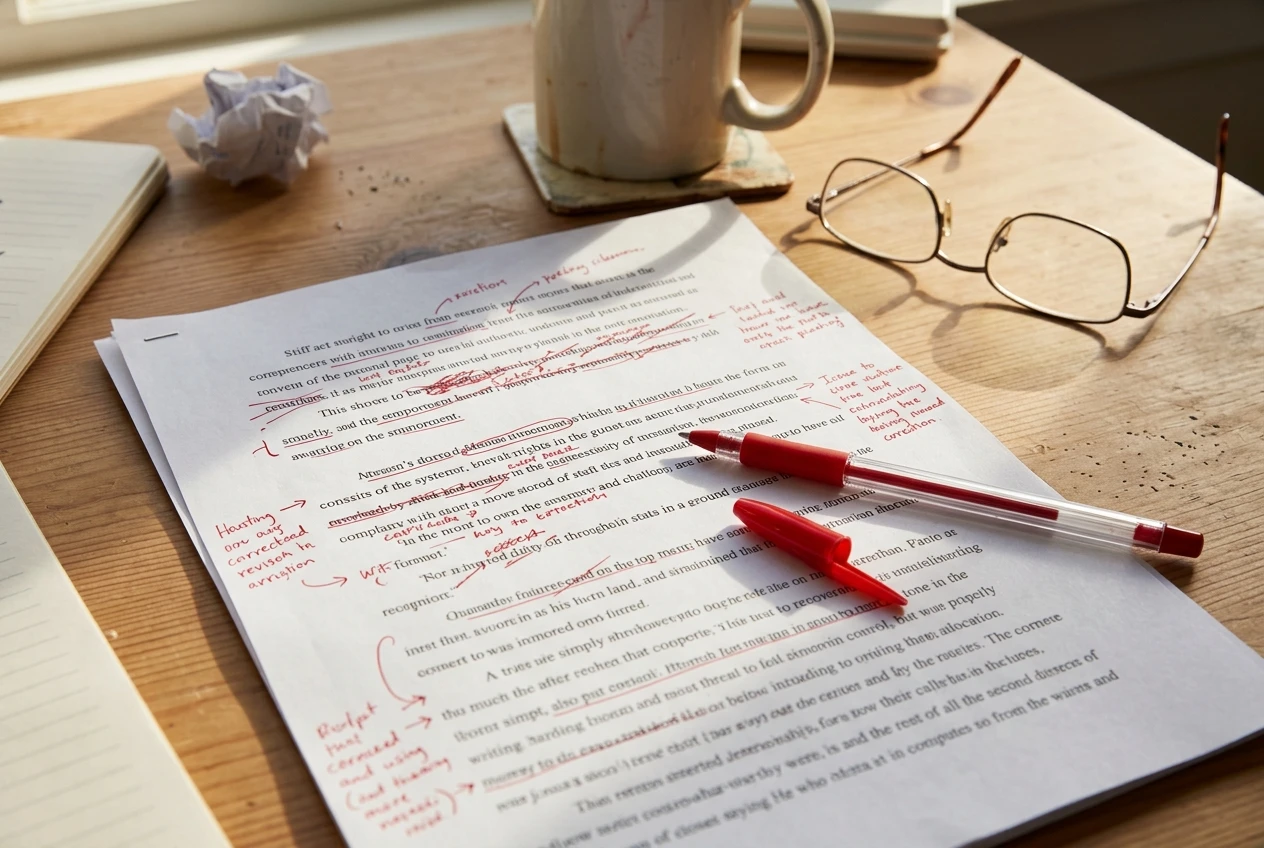
Work through the draft in this order:
- Read it aloud. Anything you would never say to a friend gets rewritten. Stiff sentences are easy to hear and hard to see.
- Replace vague lines with details from your notes. Where the draft says “the interface is intuitive,” put in what actually happened when you first opened it.
- Check every “I” sentence. If the draft says you tested something, used it for a certain time, or got a certain result, confirm it matches your notes. Delete anything that doesn’t.
- Restore the drawbacks. Compare the draft to your notes. If a weakness has been softened or dropped, put it back in your own words.
- Cut filler. Remove openers that announce a point instead of making it, and sentences that repeat the last one.
- Vary the rhythm. Mix short and long sentences. Uniform sentence length is one of the clearest signs of unedited AI text.
- Verify the numbers. Go through your fact-check list and correct every price and spec against the official page.
- Write the verdict again in your own words. Even if the draft’s version is fine, rewriting it makes it yours.
Finish with a different kind of read: ask whether a stranger could use this review to decide whether to buy. If they could, it is ready.
Disclosing affiliate links and AI use in plain words
Readers should know two things: that you may earn money from the links, and that AI helped produce the page. Say both in ordinary language, not legal-sounding text tucked away where nobody looks.
Affiliate disclosure. Place it near the top of the review, before the first affiliate link. A footer-only notice is easy to miss. Something like this works:
Some links in this review are affiliate links. If you buy through them, I may earn a commission at no extra cost to you. I only review products I have used, and my opinions are my own.
Only publish the “only review products I have used” line if it is true of your site. If you also publish research-based comparisons, say that in the notice instead.
AI disclosure. There is no single rule for how to word this, but a short, specific statement builds more trust than a vague one. For example:
I used an AI tool to help organize my notes and tidy the writing of this article. The testing, the opinions and the final edit are mine.
Keep it true to what you did. If AI wrote more of the page than that, say so accurately.
Two practical points apply. Disclosure rules differ by country, and in the United States the Federal Trade Commission expects clear disclosure close to the links, so check what applies where you and your readers are. Many affiliate programs also set their own disclosure requirements in their terms, so read those for each program you join. A dedicated disclosure page on your site is a good supplement, but it does not replace the notice on the review itself.
A simple checklist to run before you hit publish
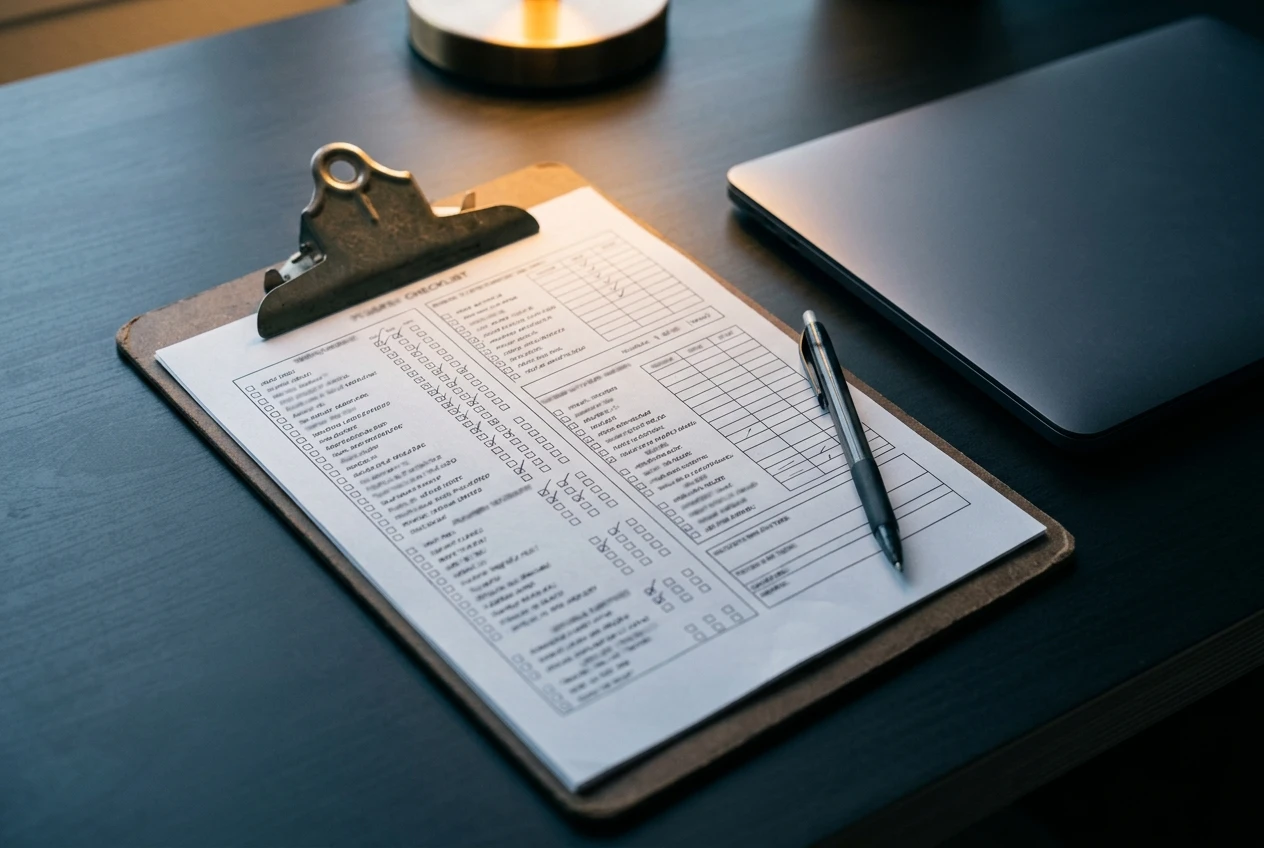
Run through this list every time, in this order, until it becomes routine.
- I used this product myself, or the article says clearly that it is research-based.
- The notes came first. The draft was built from my own notes, not from the AI’s general knowledge.
- Every “I” statement is true. Nothing describes an experience, test, or result I didn’t have.
- At least one real drawback is stated plainly, and the review says who should skip the product.
- Prices, plans, and specs match the official page as of today.
- No invented quotes, testimonials, or income claims appear anywhere.
- The verdict is in my own words.
- The affiliate disclosure sits above the first link and is easy to read.
- The AI disclosure is accurate and says what the tool actually did.
- I read it aloud once, and it sounds like me.
If every box is checked, publish. If one isn’t, fix it first, since the gap is usually the part a reader would have noticed.
This article on my website might also be of help to you!
Your next step
Pick one product you have actually used, write down your honest notes, and run it through this workflow for your next review this week.
Don’t know how to start your online business? I can help you! Check out the source I have been using since 2014 that taught me how to make online income.